
“In today’s smart communication era, networking in advanced intercom systems has become essential for seamless connectivity and security.”
Networking in Advanced Intercom Systems and Communication systems play a vital role in modern buildings and organizations. Among these systems, intercom technology has evolved significantly over time. Traditional intercom systems were mainly designed for simple voice communication between two or more locations within a building. However, with the advancement of networking technologies, intercom systems have transformed into powerful communication and security tools. Modern intercom systems now integrate networking capabilities that allow voice, video, and data communication across multiple devices and locations.
“Networking in advanced intercom systems ensures seamless communication across multiple devices.”
“Modern security depends heavily on networking in advanced intercom systems.”
“With networking in advanced intercom systems, users can access intercoms remotely.”
“Businesses rely on networking in advanced intercom systems for efficient communication.”
- “Networking in advanced intercom systems is essential for modern smart communication.”
- “The efficiency of networking in advanced intercom systems improves security and control.”
- “Future technologies depend on networking in advanced intercom systems for seamless integration.”
- “Choosing the right networking in advanced intercom systems ensures long-term reliability.”
“The future of communication is driven by networking in advanced intercom systems.”
Networking has become a key component in the development of advanced intercom systems. By connecting devices through local area networks (LAN), wide area networks (WAN), or the internet, networking enables seamless communication, improved scalability, enhanced security, and remote access. As organizations increasingly rely on smart technologies and digital communication systems, the role of networking in intercom systems continues to grow in importance.
Evolution of Intercom Systems
Early intercom systems were based on analog technology. These systems used dedicated wiring between devices and allowed only voice communication. While they were effective for small environments, they had several limitations. For example, adding new devices required additional wiring, and system expansion was often costly and complex.
With the development of digital communication and internet technologies, intercom systems have shifted toward Internet Protocol (IP)-based solutions. IP intercom systems operate using the same networking infrastructure used for computers and other digital devices. This transition has significantly enhanced the capabilities of intercom systems, enabling them to support audio, video, and data communication through a shared network.
Today’s advanced intercom systems are commonly used in residential buildings, offices, hospitals, educational institutions, and industrial facilities. These systems are often integrated with other technologies such as security cameras, access control systems, and mobile applications.
Role of Networking in Advanced Intercom Systems
Network Connectivity
One of the most important roles of networking in advanced intercom systems is providing connectivity between devices. Instead of using dedicated cables for each intercom unit, modern systems use network infrastructure such as Ethernet or wireless networks. This allows multiple intercom stations, cameras, and control panels to communicate through a single network.
Network connectivity simplifies installation and reduces the need for complex wiring. Devices can be connected to switches or routers, allowing them to communicate efficiently across the network.
Scalability and Flexibility
Networking enables intercom systems to expand easily as the needs of an organization grow. In traditional systems, adding new intercom stations required installing new cables and modifying the system hardware. In contrast, network-based intercom systems allow new devices to be added simply by connecting them to the network and configuring them through software.
This scalability makes advanced intercom systems ideal for large buildings, campuses, and multi-location organizations. As the system grows, administrators can easily add new devices without disrupting existing operations.
Remote Access and Monitoring
Another major advantage of networking in intercom systems is remote access. With internet connectivity, users can monitor and control intercom systems from virtually anywhere. Building managers, security personnel, or homeowners can access the system using smartphones, tablets, or computers.
For example, when a visitor presses a door intercom, the user can receive a notification on their mobile device, view live video, and communicate with the visitor. This feature enhances convenience and improves security, especially in residential and commercial environments.
Integration with Security Systems
Advanced intercom systems often integrate with other security technologies such as surveillance cameras, alarm systems, and electronic door locks. Networking enables these systems to communicate and share information with each other.
For instance, when a visitor arrives at the entrance, the intercom system can activate a nearby security camera to capture video footage. The user can verify the visitor’s identity through the video feed before granting access. This integration creates a comprehensive security solution that enhances safety and monitoring.
Video Communication
Modern intercom systems support both voice and video communication. Networking makes it possible to transmit high-quality video signals between devices. Video intercom systems are particularly useful in buildings where verifying the identity of visitors is important.
With network connectivity, video feeds can be transmitted to multiple devices simultaneously. This allows security personnel or residents to view live footage and communicate with visitors in real time.
Centralized System Management
Networking allows administrators to manage advanced intercom systems from a centralized control platform. System administrators can configure device settings, monitor system performance, update software, and manage user permissions through a management interface.
Centralized management improves efficiency and reduces the time required for maintenance and troubleshooting. In large organizations, this feature helps ensure that communication systems operate smoothly and securely.
Reliability and Redundancy
Network-based intercom systems can incorporate reliability features such as backup servers, redundant network connections, and automatic failover mechanisms. These features ensure that communication remains operational even if part of the network experiences a failure.
This reliability is particularly important in critical environments such as hospitals, transportation hubs, and industrial facilities where communication systems must remain functional at all times.
Benefits of Network-Based Intercom Systems
Network-based intercom systems provide several advantages over traditional analog systems. They offer improved communication quality, enhanced flexibility, and greater integration with other technologies. These systems also support advanced features such as video calls, mobile access, and automated alerts.
Additionally, network-based systems can support large numbers of devices without requiring extensive physical infrastructure. This makes them more cost-effective and adaptable to modern building environments.
Challenges and Considerations
Despite their many advantages, network-based intercom systems also present certain challenges. One major concern is cybersecurity. Since these systems are connected to networks and sometimes the internet, they can be vulnerable to hacking or unauthorized access if proper security measures are not implemented.
Organizations must use strong authentication methods, encryption, and secure network configurations to protect intercom systems from cyber threats.
Another challenge is network dependency. If the network experiences downtime or connectivity issues, the intercom system may also be affected. Therefore, reliable network infrastructure and backup systems are essential for maintaining uninterrupted communication.
Future of Advanced Intercom Systems
The future of intercom technology is closely linked to the development of smart buildings and the Internet of Things (IoT). Advanced intercom systems are increasingly being integrated with artificial intelligence, facial recognition, and cloud-based platforms.
For example, AI-powered intercom systems can automatically recognize authorized individuals and grant them access without manual verification. Cloud-based systems allow users to manage and monitor intercom devices from anywhere in the world.
As networking technologies continue to improve, intercom systems will become even more intelligent, efficient, and secure.
OUTBOUND LINK : https://www.copperconnections.com/pbx, https://www.copperconnections.com/ip-pbx


Image Caption:
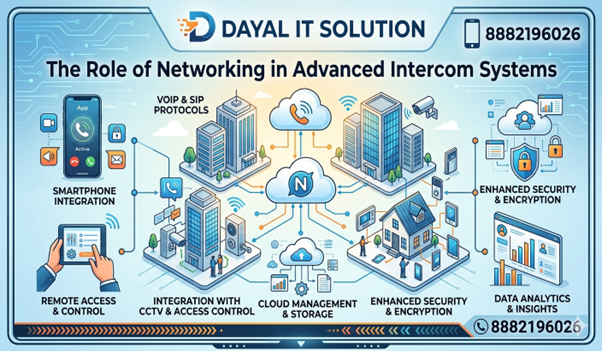
An illustrated overview of how networking enhances advanced intercom systems,
highlighting smartphone integration, VoIP and SIP protocols,
cloud management, CCTV and access control integration,
remote monitoring, enhanced security with encryption,
and data analytics for smart building communication. 📡📱🏢
HASHTAG
#DayalITSolution
#AdvancedIntercom
#NetworkingTechnology
#SmartSecurity
#VoIPTechnology
#SIPProtocols
#SmartBuilding
#CloudManagement
#RemoteAccess
#CCTVIntegration
#AccessControl
#NetworkSecurity
#DigitalCommunication
#SmartHomeTechnology
#ITInfrastructure
#TechInnovation
#SecuritySystems
#DataAnalytics
#IoTTechnology
Primary Keywords
- Advanced Intercom Systems
- Networking in Intercom Systems
- IP Intercom Technology
- Smart Intercom Solutions
- Network Communication Systems
Technical Keywords
- VoIP Technology
- SIP Protocol
- Cloud Management
- Network Infrastructure
- IoT Communication
- LAN and WAN Networking
- Data Transmission
- Digital Communication Systems
Security Keywords
- Security Intercom Systems
- Network Security
- Encrypted Communication
- Access Control Integration
- CCTV Integration
Feature-Based Keywords
- Smartphone Integration
- Remote Access Control
- Video Intercom Systems
- Smart Building Communication
- Cloud Storage Solutions
- Real-time Monitoring
Business/Service Keywords
- CCTV Installation
- Intercom Installation
- Security System Installation
- IT Networking Services
- Smart Security Solutions
Address
Plot No. 2528, Adarsh Nagar Phase-2,
Old Police Chowki, Gali No. 6,
Ballabgarh, Faridabad – 121004,
Haryana, India.
M: 8882196026,9718191998
Website : https://dayalitsolutions.com/ , https://dayalit.in/