

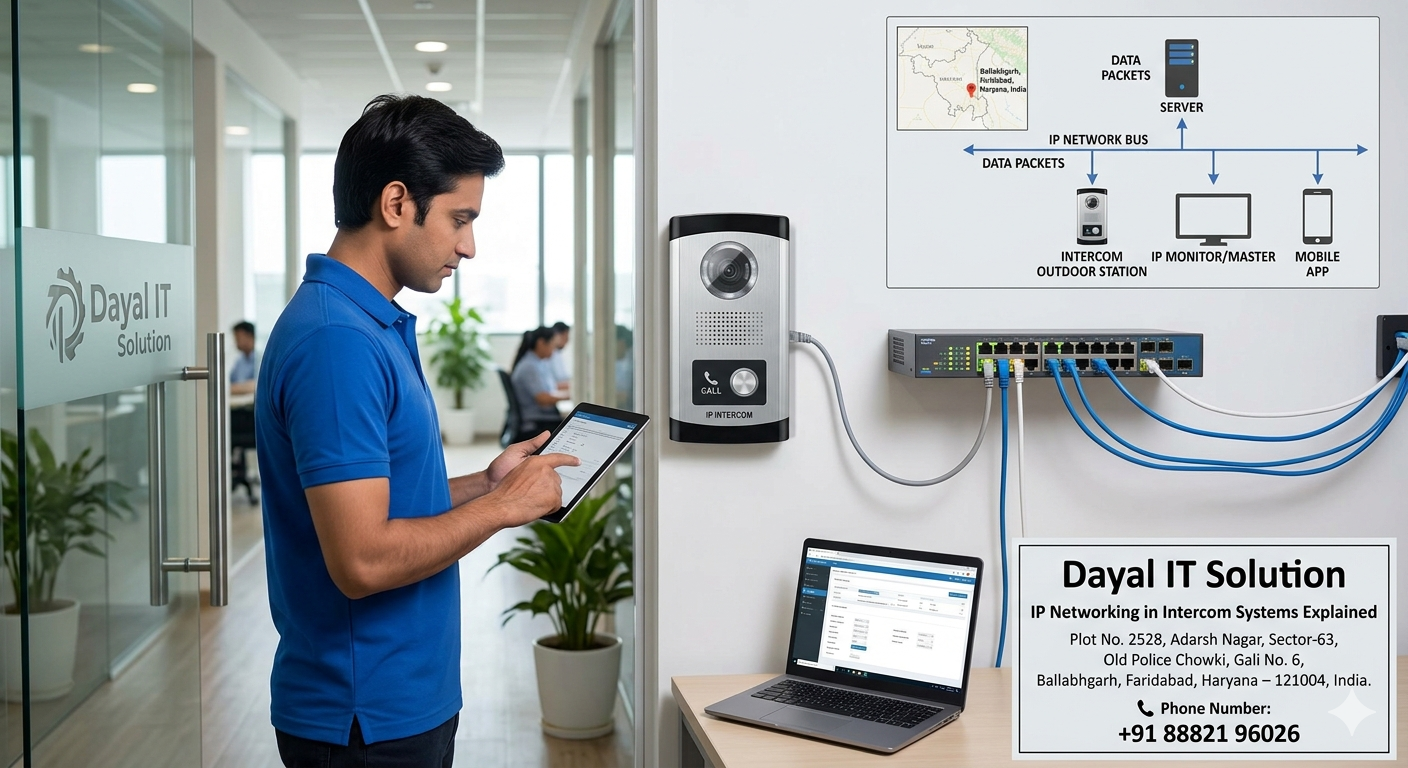
IP Networking in Intercom Systems is transforming modern communication by enabling seamless connectivity over LAN and internet networks. Unlike traditional systems, IP networking in intercom systems allows better scalability, remote access, and integration with smart security solutions. Businesses and homeowners now prefer IP networking in intercom systems due to its flexibility, reliability, and cost-effectiveness.
The demand for IP networking in intercom systems is growing rapidly as more businesses adopt smart security solutions. With IP networking in intercom systems, users can manage communication remotely, integrate with CCTV, and scale systems easily without complex wiring.
In conclusion, IP networking in intercom systems offers a reliable, scalable, and future-ready communication solution for homes and businesses.
Intercom systems have evolved significantly over the past few decades. Traditional analog intercom systems once relied on dedicated wiring and limited communication capabilities. Today, modern intercom solutions are increasingly built on IP (Internet Protocol) networking, allowing them to integrate with existing network infrastructure and provide advanced communication features. IP networking has transformed intercom systems into powerful, scalable communication platforms used in offices, residential complexes, hospitals, schools, and industrial facilities.
What is IP Networking in Intercom Systems?
IP networking in intercom systems refers to the use of internet protocol technology to transmit voice, video, and control signals over a local area network (LAN) or the internet. Instead of connecting each device with separate wires, IP intercom systems connect devices such as door stations, indoor monitors, and management software through a network.
Each device is assigned an IP address, enabling it to communicate with other devices on the same network or even remotely through cloud services.
This technology makes intercom systems more flexible, easier to install, and capable of supporting many advanced features that traditional analog systems cannot provide.
Key Components of an IP Intercom System
An IP-based intercom system typically consists of several essential components:
1. IP Door Stations
These are the external units installed at building entrances or gates. They often include a microphone, speaker, camera, and call button. Visitors can use the door station to communicate with people inside the building.
2. Indoor Stations or Monitors
Indoor stations allow residents or staff to answer calls from door stations. Many modern indoor stations include touchscreens, video displays, and integration with smart home or building systems.
3. Network Infrastructure
IP intercom systems use standard networking equipment such as switches, routers, and Ethernet cables. Many systems also support Power over Ethernet (PoE), which allows devices to receive both power and data through a single cable.
4. Management Software
Centralized management software allows administrators to configure devices, monitor system activity, control access permissions, and integrate the intercom with other systems such as access control and video surveillance.
5. Mobile Applications
Some IP intercom systems allow users to answer door calls and unlock doors using mobile apps from anywhere with internet access.

How IP Intercom Systems Work
When a visitor presses the call button on a door station, the system sends a digital signal through the network to the designated indoor station or user device.
The communication process typically involves several steps:
- The door station captures audio and video.
- The data is converted into digital packets.
- These packets are transmitted over the network using IP protocols.
- The receiving device decodes the packets and plays the audio/video.
- The user can respond and communicate with the visitor.
This packet-based communication allows intercom signals to travel across local networks or even through the internet.
Advantages of IP Networking in Intercom Systems
IP-based intercom systems offer many advantages over traditional analog systems.
Scalability
IP systems are highly scalable. Adding new devices usually requires connecting them to the network and assigning an IP address. This makes them ideal for large facilities and expanding buildings.
Flexibility
Because they use network infrastructure, IP intercom systems can work across multiple buildings or locations. Communication can also occur remotely through smartphones or computers.
High-Quality Audio and Video
Digital transmission ensures clearer audio and high-definition video compared to older analog systems.
Integration with Other Systems
IP intercom systems can integrate with security cameras, access control systems, alarm systems, and building management platforms. This integration improves overall building security and automation.
Remote Access
Users can receive intercom calls on their smartphones, allowing them to see visitors and unlock doors even when they are not physically present.
Common Networking Protocols Used
IP intercom systems rely on several standard networking protocols to function effectively.
SIP (Session Initiation Protocol)
SIP is widely used for initiating voice and video communication sessions. Many IP intercom systems use SIP to connect with VoIP phone systems.
RTP (Real-Time Transport Protocol)
RTP is responsible for transmitting real-time audio and video streams across the network.
HTTP and HTTPS
These protocols allow web-based configuration and management of intercom devices.
ONVIF
ONVIF is often used for integrating intercom systems with IP surveillance cameras and video management systems.
Installation Considerations
When installing an IP intercom system, several factors should be considered.
Network Capacity
The network must support the bandwidth required for audio and video streaming. High-definition video requires more bandwidth than audio-only systems.
Power over Ethernet (PoE)
Using PoE simplifies installation because devices do not require separate power supplies.
Network Security
Since IP intercom systems operate on networks, proper cybersecurity measures such as firewalls, encryption, and secure authentication are essential.
Device Placement
Door stations should be placed at accessible heights, and indoor monitors should be installed where users can easily interact with them.
Applications of IP Intercom Systems
IP intercom systems are used in many environments:
Residential Buildings
Apartment complexes and gated communities use IP intercoms to manage visitor access and communication.
Commercial Offices
Businesses use them to control entry and improve internal communication.
Healthcare Facilities
Hospitals rely on intercom systems for communication between staff and patient areas.
Educational Institutions
Schools use IP intercoms for campus security and emergency announcements.
Industrial Facilities
Factories and warehouses use them for communication between departments and for security monitoring.
Challenges and Limitations
Despite their advantages, IP intercom systems have some challenges.
Network Dependency
If the network goes down, communication may be disrupted.
Initial Cost
IP systems can be more expensive initially compared to simple analog intercoms.
Cybersecurity Risks
Connected devices may be vulnerable to hacking if proper security measures are not implemented.
However, these challenges can be minimized with proper planning, network management, and security practices.
The Future of IP Intercom Systems
The future of intercom systems is closely tied to developments in networking and smart building technology. Artificial intelligence, cloud services, and Internet of Things (IoT) integration are expected to play a larger role.
For example, future systems may include features such as facial recognition for access control, AI-powered visitor management, and deeper integration with smart home ecosystems.
As networks become faster and more reliable, IP intercom systems will continue to evolve and offer even more advanced communication and security capabilities.
Conclusion
IP networking has revolutionized intercom systems by transforming them into flexible, scalable, and feature-rich communication platforms. By leveraging existing network infrastructure, these systems enable high-quality voice and video communication, remote access, and integration with other building technologies.
Image Caption:
IP networking enhances modern intercom systems by enabling seamless communication between door stations, indoor monitors, servers, and mobile devices—providing flexible, scalable, and secure building access solutions.
Hashtag:
#IPIntercom #IPNetworking #SmartBuilding #IntercomSystem #NetworkTechnology #SmartSecurity #BuildingAutomation #TechInnovation #AccessControl #DigitalCommunication
Address
Plot No. 2528, Adarsh Nagar Phase-2,
Old Police Chowki, Gali No. 6,
Ballabgarh, Faridabad – 121004,
Haryana, India.
M: 8882196026
Website : https://dayalitsolutions.com/ , https://dayalit.in/