
10 Advanced Networking Solutions for Intercom Communication
In today’s digital world, intercom networking solutions and security systems are becoming more advanced and interconnected. One technology that has significantly evolved in recent years is the intercom system. Traditionally used for simple voice communication between two locations, intercom systems have now transformed into intelligent communication platforms powered by smart networking technologies. These modern systems combine networking, automation, and cloud connectivity to create efficient, secure, and flexible communication solutions for homes, businesses, and large facilities.
Smart networking solutions have made intercom communication more reliable, scalable, and accessible than ever before. By integrating intercom systems with digital networks, organizations and homeowners can experience improved communication, enhanced security, and greater convenience.
Evolution of Intercom Communication
In the past, intercom systems were mainly analog devices that relied on dedicated wiring between units. These systems were commonly installed in offices, apartment buildings, and factories to allow communication between different rooms or entrances. While traditional intercom systems were useful, they had several limitations. They usually supported only voice communication, required complex wiring, and lacked remote access or integration with other security systems.
The development of digital networking technologies has changed the way intercom systems operate. Modern intercom systems now use Internet Protocol (IP) networking, allowing them to transmit voice, video, and data through the same network infrastructure used by computers and other digital devices. This advancement has opened the door to many new features and capabilities.
Role of IP-Based Networking
One of the most important components of smart intercom communication is IP-based networking. In an IP intercom system, each device is connected to a network and assigned a unique IP address. These devices communicate with each other through routers, switches, and other networking equipment.
IP-based communication offers several advantages over traditional analog systems. First, it allows for higher-quality audio and video transmission. Digital signals are clearer and less prone to interference compared to analog signals. Second, IP systems are highly scalable. New devices can be added to the network without extensive rewiring, making it easier to expand the system as needed.
For example, in a large apartment complex, multiple intercom units can be connected through a single network. Residents can communicate with visitors at the entrance, security personnel, or other residents using the same integrated system.
Integration with Local Networks
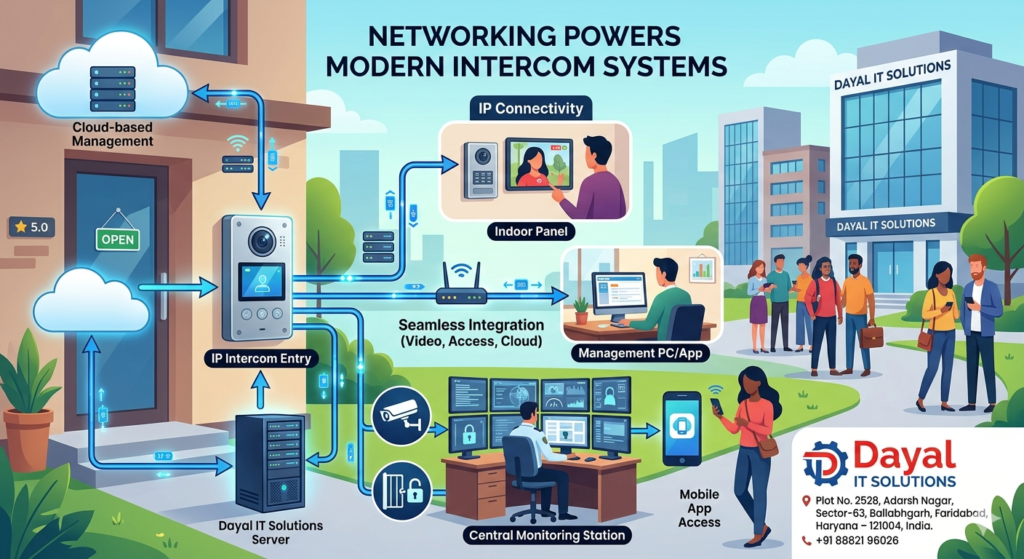
Modern intercom systems often operate within a Local Area Network (LAN). This integration allows intercom devices to work alongside other network-connected systems such as CCTV cameras, access control systems, and alarm systems.
By connecting these technologies through a network, building managers can create a comprehensive security and communication solution. For instance, when a visitor presses the intercom button at the entrance gate, the system can automatically activate a security camera and display a live video feed on a monitor or smartphone.
This level of integration improves both security and operational efficiency.
Power over Ethernet (PoE)
Another key innovation in smart networking solutions is Power over Ethernet (PoE) technology. PoE allows both power and data to be transmitted through a single Ethernet cable. This eliminates the need for separate power supplies for intercom devices.
The use of PoE simplifies installation and reduces infrastructure costs. Technicians only need to install one cable to connect each device to the network and provide power. This makes it easier to install intercom systems in locations such as building entrances, parking areas, and remote offices.
PoE technology is widely used in modern video intercom systems because it improves reliability while reducing wiring complexity.
Video Intercom and Visual Communication
One of the most popular features of modern intercom systems is video communication. Video intercom systems include cameras and display screens that allow users to see visitors before granting access.
Networking technology enables these systems to transmit high-definition video streams in real time. When a visitor presses the intercom button, the system sends a video call to the indoor monitor or the user’s smartphone. The user can then communicate with the visitor and decide whether to allow entry.
Video intercom systems significantly improve security because they help identify visitors and prevent unauthorized access. They are widely used in residential buildings, offices, hospitals, and educational institutions.
Mobile and Remote Access
Smart networking solutions have also made it possible to integrate intercom systems with mobile devices. Many modern intercom systems are connected to mobile applications that allow users to control the system from their smartphones or tablets.
Through these apps, users can receive notifications when someone presses the intercom button. They can view live video, speak with visitors, and unlock doors remotely. This feature is particularly useful for homeowners who are not physically present at home.
For example, if a delivery person arrives at the door while the homeowner is away, the homeowner can still communicate with them and provide instructions through the mobile app.
Cloud-Based Intercom Management
Another significant advancement in intercom networking is cloud connectivity. Cloud-based systems allow administrators to manage intercom devices through online platforms.
Building managers can monitor activity, update system settings, and manage user access from any location with an internet connection. This centralized management approach is especially beneficial for large buildings and organizations with multiple facilities.
Cloud-based intercom systems also enable automatic software updates and data backups, ensuring that the system remains secure and up to date.
Security and Data Protection
Since modern intercom systems operate over digital networks, cybersecurity is an essential consideration. Smart networking solutions include various security features to protect communication and prevent unauthorized access.
These features may include:
- Data encryption to protect audio and video transmissions
- Secure login authentication
- Network firewalls and access control
- Activity monitoring and logging
These security measures ensure that only authorized users can access the system and that communication remains private and protected.
Scalability and Flexibility
One of the major benefits of network-based intercom systems is their scalability. Organizations can easily expand their communication systems as their needs grow. New intercom devices can be added to the network without major infrastructure changes.
This flexibility makes smart intercom systems suitable for various environments, including:
- Residential complexes
- Corporate offices
- Hospitals
- Schools and universities
- Industrial facilities
As organizations grow, their communication infrastructure can grow with them.
Future of Smart Intercom Networking
The future of intercom communication will continue to evolve with emerging technologies such as Artificial Intelligence (AI), Internet of Things (IoT), and 5G connectivity. These technologies will enable smarter and more automated communication systems.
For example, AI-powered intercom systems may use facial recognition to identify visitors automatically. IoT integration will allow intercom devices to communicate with other smart devices within a building, creating fully connected environments.
With faster internet speeds and improved network reliability, smart intercom solutions will become even more advanced and widely adopted.
Conclusion
Smart networking solutions have revolutionized the way intercom systems operate. By integrating IP networking, cloud technology, mobile applications, and advanced security features, modern intercom systems provide a powerful communication and security solution.
Image Conclusion
The integration of smart networking technologies has transformed traditional intercom systems into advanced communication and security solutions. By combining IP networking, cloud connectivity, mobile integration, and video capabilities, modern intercom systems offer greater flexibility, improved security, and convenient remote access. As technology continues to evolve, smart networking will play an even bigger role in shaping the future of building communication systems, making environments safer, more connected, and more efficient.
Hashtags
#SmartIntercom
#IPIntercom
#NetworkingSolutions
#IntercomCommunication
#VideoIntercom
#SmartSecurity
#BuildingCommunication
#NetworkTechnology
#HomeAutomation
#AccessControl
#SecuritySystems
#SmartBuildings
#ITInfrastructure
#DigitalCommunication
#ConnectedDevices
#CloudTechnology
#IoTSolutions
#SecurityInnovation
#ModernNetworking
#TechSolutions
Address
Plot No. 2528, Adarsh Nagar Phase-2,
Old Police Chowki, Gali No. 6,
Ballabgarh, Faridabad – 121004,
Haryana, India.
M: 8882196026
Website : https://dayalitsolutions.com/ , https://dayalit.in/